1

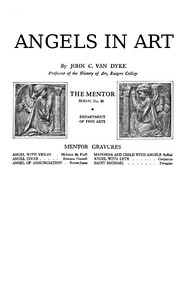
The Mentor: Angels in Art, Vol. 1, Num. 40 — Inside the Classic
800
3
Project Gutenberg
2016
Angels in art
Readers of public-domain and historical texts
Project Gutenberg digital edition
en
Edition facts
Words: 9,937
Reading time: 44 min
Text sections: 8
Source:
Project Gutenberg record #50843
This editorial note examines John C. Van Dyke's language and narrative voice in 'The Mentor: Angels in Art, Vol. 1, Num. 40', focusing on how he blends art history with anecdotal biography and shifts in pace between analytical passages and vivid descriptions of artworks.
Editorial Edition Score
4.6/5
★★★★★
★★★★★
Calculated from edition completeness, EPUB availability, text structure and catalogue metadata. Not a user rating.
Edition quality
John C. Van Dyke opens his essay on angels in art with a pointed anecdote: the realist Courbet telling a pupil to paint his grandfather instead of an angel. This conversational, almost confrontational tone sets the stage for a text that moves between brisk historical overview and intimate biographical sketches. Van Dyke writes as a professor, but his voice is that of a storyteller, weaving facts with opinion and occasional dry humor. The pace shifts noticeably: early sections race through centuries of winged figures from Egypt to Rome, while later passages slow to dwell on individual artists like Benozzo Gozzoli and Burne-Jones, offering personal details and even quoting letters.
Anecdotal Openings and Shifting Registers
Van Dyke frequently uses a short, vivid story to introduce a topic. The Courbet exchange is the most striking, but he also begins the Burne-Jones section with the artist's motherless childhood and his father's restrictive library. These openings are not merely decorative; they establish a human scale before moving into broader art-historical claims. The language in these passages is plain and direct—'The lot of a lad without a mother is bound to be a hard one'—contrasting with the more formal, analytical prose of sections on iconography. This register shift is a deliberate rhetorical device, making the text accessible while still conveying expertise.
Pacing: From Sweeping Surveys to Focused Portraits
The essay's structure creates a rhythm of acceleration and deceleration. The opening paragraphs on winged figures in ancient art compress centuries into a few sentences: Egyptian, Chaldean, Assyrian, Hittite, Persian, Greek, Roman. The pace is breathless. Then, abruptly, the narrative slows for Benozzo Gozzoli. Van Dyke devotes several paragraphs to his apprenticeship, his letters to Piero de' Medici, and the physical experience of visiting the Riccardi chapel. The prose becomes more descriptive and sensory: 'One steps from the busy Florentine street, through massive portals, into a courtyard.' This shift in pace mirrors the transition from general history to specific appreciation.
Voice and the Use of Direct Quotation
Van Dyke's authorial voice is confident and occasionally opinionated, as when he remarks that the early painters 'saw things with the eye of faith.' He does not hesitate to judge: the angels of realists were 'not very spiritual.' Yet he also lets his subjects speak. The inclusion of Benozzo's letter—'I have no other thought in my heart... but how best to perfect my work'—is a rare moment of primary source quotation that adds authenticity and emotional weight. For Burne-Jones, Van Dyke relies on biographical narrative rather than direct quotes, but he still shapes the story with phrases like 'his struggle was a long one and a hard one,' which carry a tone of sympathetic admiration.
Readers should attend to how Van Dyke balances instruction with entertainment. His essay is not a dry catalogue but a guided tour delivered by a knowledgeable, slightly wry companion. The shifts in pace—from rapid historical summary to lingering biographical detail—are cues to what he considers most important: not just the art, but the lives and beliefs behind it. Noticing these changes in tempo and register will deepen your engagement with this compact but layered work.
Reader reflection
Take a moment to reflect on this book
Create a short personal record of your experience with this book.
Your progress
0
/
10
2
What was your overall reaction to the book?
3
Would you recommend this book to another reader?
4
How easy was the book to follow?
5
Did any part of the book feel personally relevant?
6
How distinctive were its ideas or approach?
7
Could you follow the author’s main argument?
8
How valuable was this book for your own interests?
9
What changed or sharpened your thinking?
10